
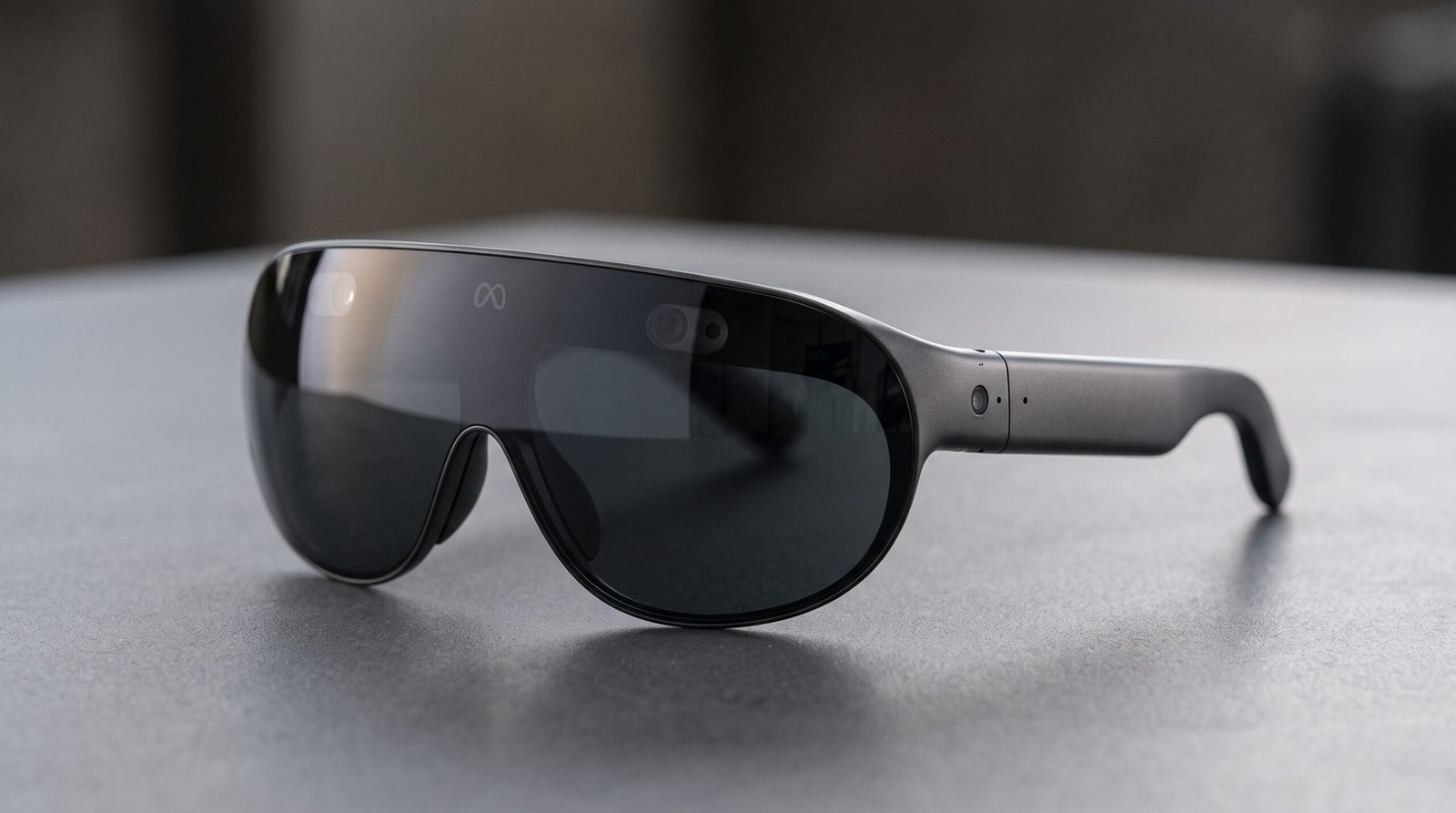
Meta VR smart glasses haven’t hit the market yet, but we generally know what smart glasses are used for and how this technology will evolve in the future. The video that was released also shows what VR glasses are capable of. Smart glasses are wearable computer glasses that put digital tools right in front of your eyes and ears. Meta VR glasses are a small, lightweight version of these smart frames. Unlike heavy virtual reality headsets, they look and feel just like ordinary spectacles. They are built to blend digital helpers into your regular daily routines without making you feel disconnected from the people around you.
So, what can these glasses do? They listen to you and let you do what you want. They display a virtual keyboard and touchpad on any surface, allowing you to type and control whatever you like. You can read and edit your projects. You can project any video onto a wall in 3D and watch movies or TV shows. You can access most apps and social media. You can watch a basketball or soccer game as if you were right there.
The main purpose of this device is to let you use technology without looking down at a screen. In modern life, people constantly look down at phones, which takes away attention from family, friends, and the road ahead. Meta built this device so you can take calls, ask questions to an artificial intelligence helper, and snap quick pictures while your hands remain free and your eyes stay up. The goal is simple, bring technology into your field of view. And you can use these glasses in many everyday situations. People wear them while walking to get spoken street directions without checking a map. Parents use them to capture quick photos and videos of their children playing without pulling a smartphone out of their pocket. Travelers use them to translate street signs or listen to instant translations of local languages. Busy workers wear them to listen to text messages, reply using only their voice, and stay connected while riding a bicycle.
This kind of wearable gadget changes how other parts of life work as well. In education, a student can look at a math problem or an old landmark, ask a direct question, and hear a simple explanation on the spot. In travel, culture barriers become much smaller because two people who speak different languages can talk almost smoothly. Socially, it makes human interaction feel more direct because screens no longer sit between faces. However, it also changes how people think about privacy, since tiny built in cameras mean society must learn new manners for public spaces.
In the future, physical glasses like these will likely disappear and give way to even simpler things. First, bulky frames will shrink into thin, lightweight normal lenses. Smart contact lenses placed directly on the eye might replace frames completely. Tiny audio implants or neural interfaces could share information straight to your senses, making physical devices invisible.
What about human healthy and Evolution?
Using smart glasses for many years brings real questions about human health, especially for the eyes. When you look at small digital displays or focus on lights sitting right in front of your lenses for hours, your eyes can get very tired. People naturally blink less often when focusing on screens, which leads to dry eyes, blurry sight, and headaches. Constantly shifting your attention between the real road and a digital prompt also makes your eye muscles work harder than usual. Beyond the eyes, wearing a powered frame all day can cause light pressure on the nose and ears and constant voice notifications can sometimes make the mind feel tired from information overload. Giving your eyes regular breaks and looking at distant objects easily prevents most of these daily issues.
As for human evolution, our eyes will not physically change or evolve simply from using smart glasses. Biological evolution takes many thousands of years and depends on natural survival rather than the tools we buy. If a person gets tired eyes or mild nearsightedness from wearing gadgets, that change only affects their own body during their lifetime; it does not alter their DNA, so they cannot pass it on to their children. Instead of our biology changing to match machines, technology will evolve to fit our natural bodies. Engineers are already designing displays that match human focal depth, softer lighting that protects natural vision, and lenses that feel just like clear air.