
Bolt Graphics Seeks 100M to Challenge Market Dominance With Zeus GPU
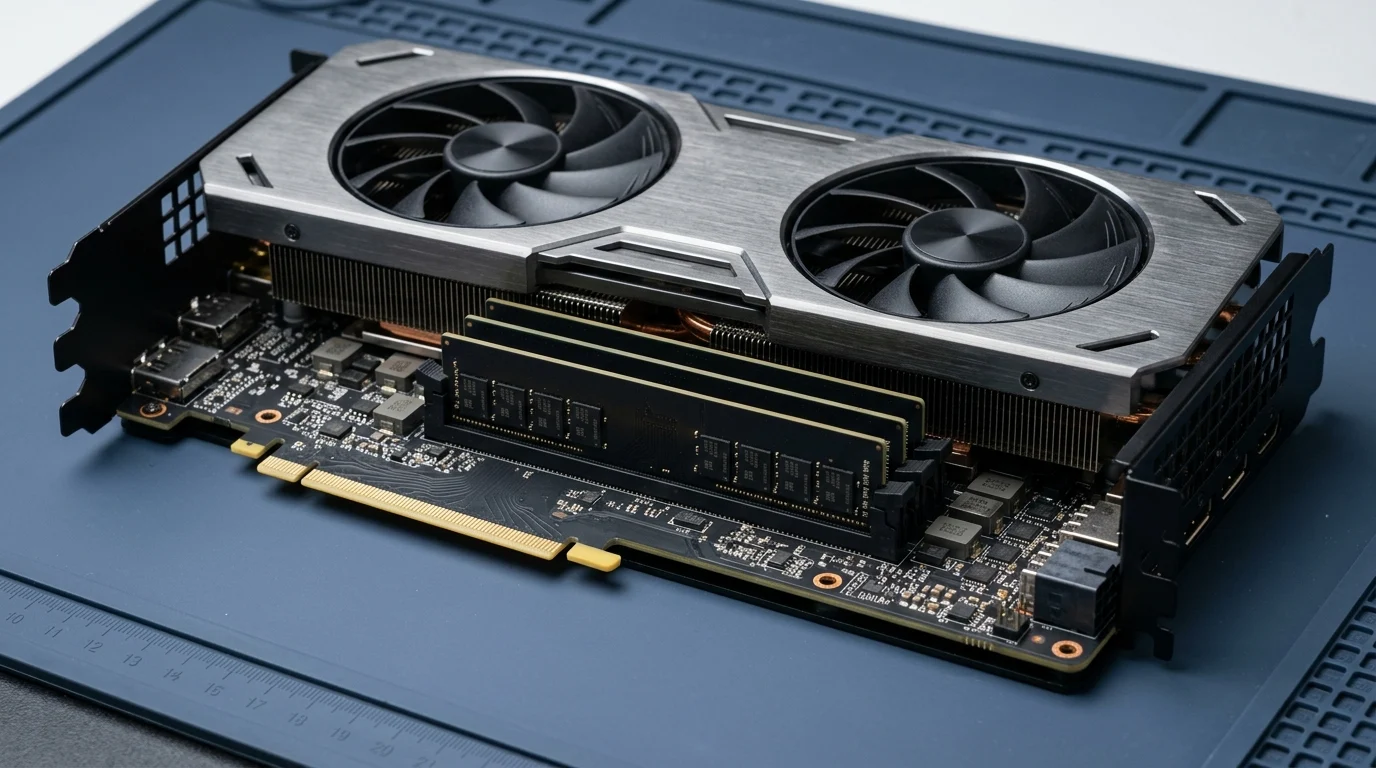
Semiconductor innovator Bolt Graphics is pursuing one hundred million dollars in Series B financing at a seven-hundred-million-dollar valuation to advance its proprietary Zeus processor architecture. While numerous fabless startups attempt to build generalized machine learning accelerators, Bolt Graphics differentiates its approach through an open RISC-V compute design, modular memory slots, and dedicated physical simulation capabilities. The company deliberately avoids competing exclusively for standard natural language processing training, focusing instead on high-precision ray tracing, electromagnetic simulation, and scientific high-performance computing (from bloomberg.com).
Modular Memory to Bypass Packaging Bottlenecks
Traditional computing processors rely heavily on high-bandwidth memory stacks that are permanently bonded onto the silicon package using complex advanced packaging methods. When global packaging capacity faces severe manufacturing bottlenecks, entire processor product lines suffer extensive delivery backlogs. Bolt Graphics circumvents this constraint by designing its Zeus architecture around upgradeable, socketed standard memory modules. Utilizing standard memory connectors allows system builders to expand memory capacity affordably while avoiding the steep pricing premiums associated with proprietary multi-die chip packaging.
Targeting Physical Simulation and Path Tracing
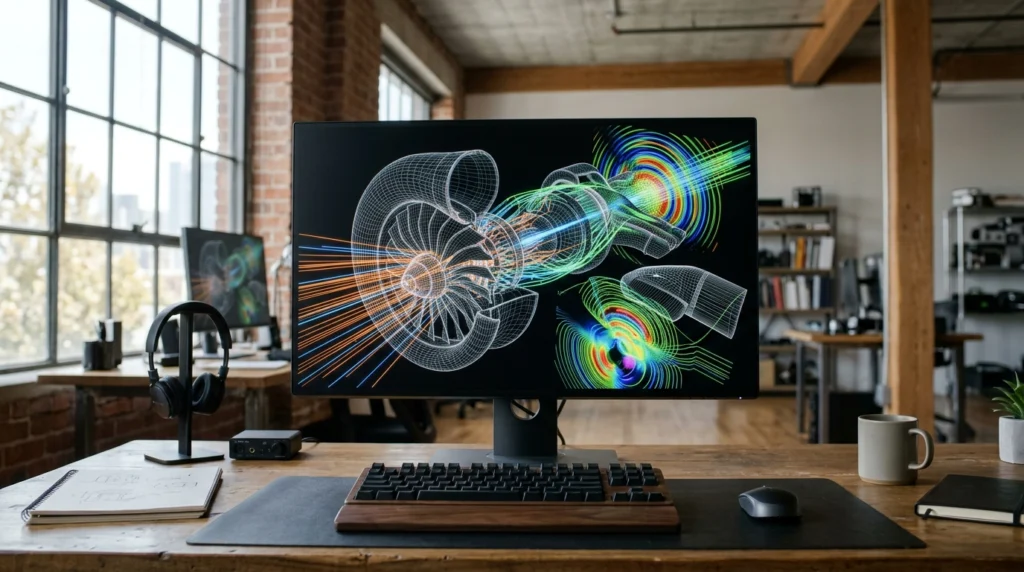
Engineering workflows in industrial automotive design, computational fluid dynamics, and seismic energy exploration demand extreme mathematical accuracy and specialized rendering pipelines. Standard neural network accelerators optimize for low-precision tensor operations that excel at text generation but fail to execute detailed physical simulation tasks. By optimizing its silicon hardware directly for double-precision floating point calculations and accelerated path tracing, Zeus addresses demanding scientific and engineering domains that established semiconductor giants have left underserved.
Chiplet Economics on Open Architecture
Designing modern microprocessors requires enormous financial resources to cover electronic design licenses and advanced mask manufacturing costs. Adopting the open-standard RISC-V instruction set architecture eliminates expensive recurring intellectual property licensing fees. Furthermore, organizing the processor into discrete modular chiplets rather than a single massive silicon die substantially improves fabrication yields. This modular engineering approach allows an agile hardware startup to produce competitive specialized processors within disciplined venture capital budgets.
Overcoming Legacy Software Moats
The primary barrier confronting any alternative processor architecture remains the entrenched software ecosystem constructed by incumbent semiconductor providers over two decades. Industrial rendering suites and scientific libraries depend heavily on established proprietary computing frameworks. To achieve seamless commercial adoption, emerging chip designers must deploy intermediate translation layers and open-source cross-compilers. Providing developers with drop-in code compatibility allows enterprise clients to transition mission-critical simulation workloads without rewriting legacy software bases.
Physical AI Training via Synthetic Simulation Environments
Developing advanced robotics and autonomous physical machinery requires realistic training environments governed by physical laws. Standard neural network training datasets cannot expose robots to dangerous real-world collisions or rare hazardous conditions. Physics-accurate synthetic environments generate simulated sensor data that trains spatial vision systems safely. Processors optimized for real-time ray tracing and rigid-body mechanics provide the computational backbone for next-generation robotic simulation platforms.
The Modular Future of Data Center Infrastructure
The enterprise data center landscape is steadily transitioning from universal one-size-fits-all server configurations toward heterogeneous computing clusters. Scientific research facilities, autonomous robotics labs, and cloud rendering studios will increasingly deploy specialized processor architectures matched directly to specific computational tasks. Standardizing modular socketed memory across server racks will extend physical hardware upgrade cycles and reduce electronic waste across global computing facilities.