
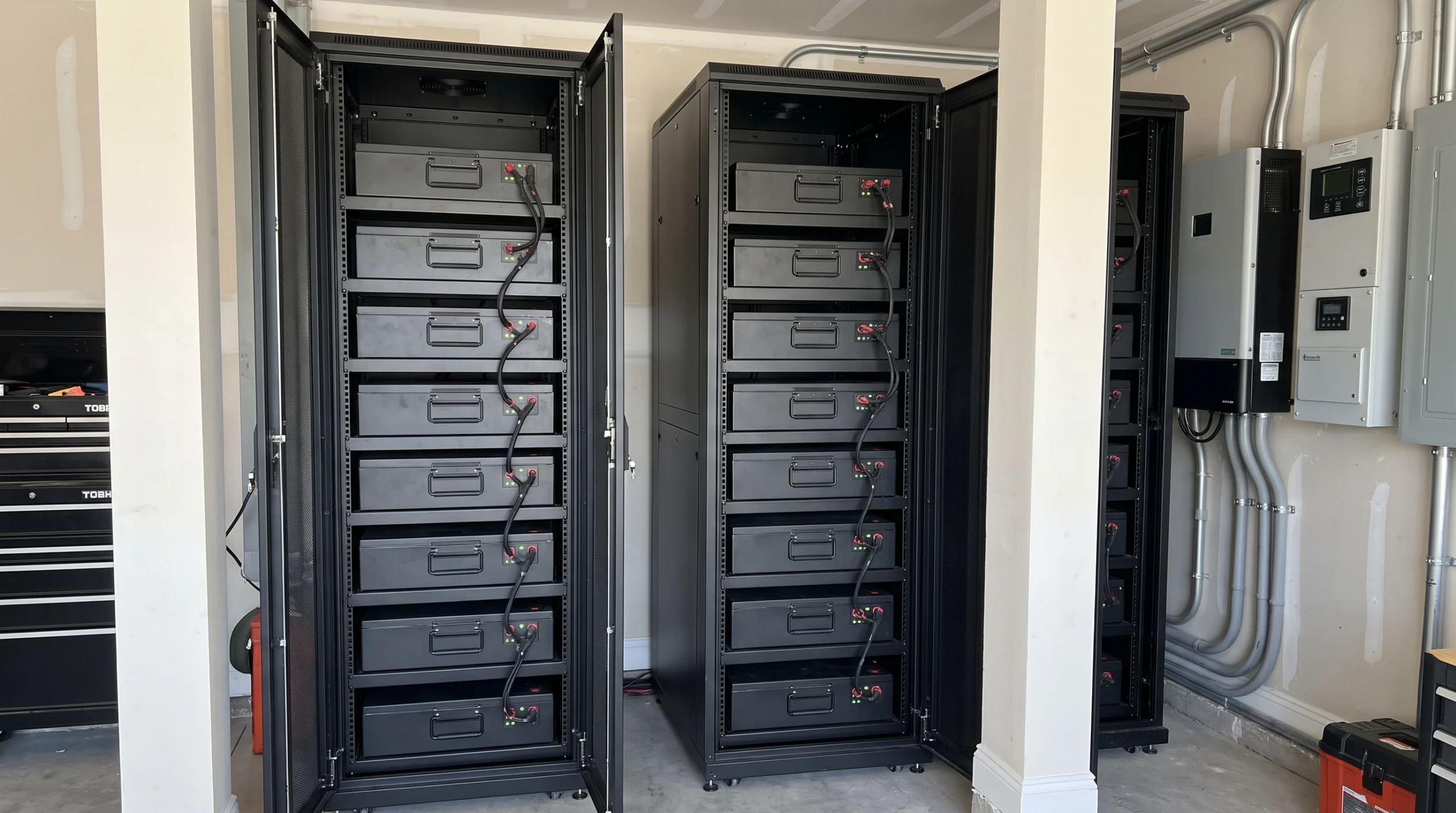
A rack battery is a large, flat rechargeable battery designed to slide neatly into a metal cabinet, much like a drawer slides into a dresser. While a small household battery powers everyday items like a television remote or a wall clock, a rack battery is powerful enough to run an entire home, a small business, or a room full of computers. As shown in the cabinet below, several of these rectangular battery boxes sit stacked one above another inside a sturdy frame, which is why people call this system a rack battery.
Why the Drawer Design Saves Space and Money
The main reason people choose this drawer-style design is that it saves space and keeps electrical equipment tidy and safe. Instead of placing heavy batteries all over the floor with tangled wires, each battery unit slides into its own slot inside the cabinet. This design also makes it very easy to add more power in the future. If a family or business starts using more electricity, they do not need to buy a whole new system; they can simply slide another battery unit into an empty slot in the cabinet.
People around the world use rack batteries in two main ways. Many families connect them to solar panels on their roofs so that extra energy collected from the sun during the day is saved inside the batteries for use at night. In addition, offices, hospitals, and internet centers use rack batteries as an emergency backup. When bad weather or a technical problem causes the city power to go out, the rack batteries take over right away so lights, refrigerators, and computers keep working without interruption.
Modern rack batteries are also built to be very safe and long-lasting. Inside each battery box, a small built-in computer watches the temperature and power levels every second to make sure the battery never gets too hot or charges too much. Because of this smart protection, a good rack battery can safely provide daily power for ten years or more.
How Much Energy Does One Rack Battery Hold?
To figure out how long a rack battery system can power your home or office, you can think of each battery drawer as a five-liter bucket of water. In the electricity world, we measure this stored energy in units called kilowatt-hours, and one standard rack battery holds about 5 units of energy. To protect the battery and help it last for many years, its built-in computer always keeps a tiny bit of power in reserve so it never runs completely dry, leaving you with about 4.5 units of usable energy inside each single battery drawer.
Calculating your total stored power is as simple as counting how many battery drawers you have stacked inside your cabinet. If you start with a single battery unit, you have 4.5 units of usable energy ready to go. If you slide four battery units into the cabinet, you multiply that amount by four, giving you 18 units of usable energy. If you fill a tall cabinet with eight battery units, you will have 36 units of usable energy waiting for an emergency or nighttime use.
The next step is to look at how fast your building uses that energy, which depends on what appliances you turn on at the same time. Running just the basics in a home—such as a refrigerator, a few lights, a television, and an internet router—uses a small trickle of about 1 unit of energy every hour. A busy family home using kitchen appliances or washing machines might use 1.5 to 2 units of energy every hour. If you turn on heavy equipment like central air conditioning, electric heaters, or a room full of office computers, your building might use 3 to 4.5 units of energy every single hour.
To find out how many hours your batteries will last during a power outage, you simply divide your total usable energy by the amount of energy your building uses each hour. For example, if you have a cabinet with four battery drawers (giving you 18 units of usable energy) and you only run basic lights and a refrigerator (using 1 unit per hour), your batteries will keep everything running for about 18 hours. If your family uses an average amount of power at 1.5 units per hour, those same four batteries will last for about 12 hours, which is easily enough to get through a whole night until the sun comes up again. However, if you run a heavy air conditioner that uses 3 units of energy every hour, those four batteries will empty out in about 6 hours, showing why people either turn off heavy appliances during a blackout or slide extra battery drawers into their cabinet for longer backup time.
Compared to Wall Mounted Batteries
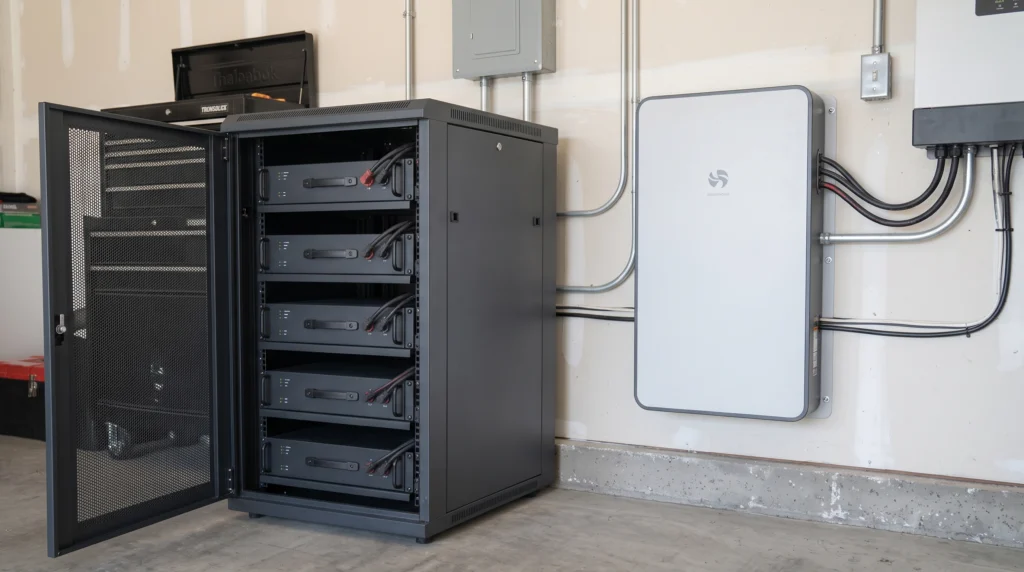
When shopping for a backup power system, many people also look at wall-mounted batteries, which are slim, stylish boxes that hang directly on a garage or utility room wall. A wall-mounted battery is a great choice if you have very little floor space and only need a single battery to cover short power outages. However, because each unit must be bolted to a sturdy wall, adding more batteries later takes up a lot of wall space and requires extra wiring work.
A rack battery cabinet does take up a small corner of the floor, but it is much easier and cheaper to expand over time. If you want a simple, one-time setup that keeps your floor completely clear, a wall-mounted battery works well, while a rack battery system is the better long-term choice for families and businesses that want the freedom to easily add more backup power in the future.