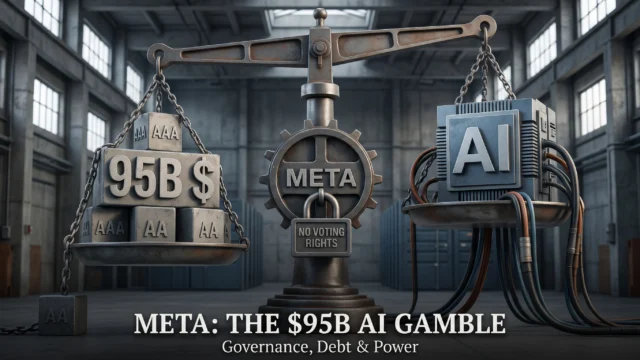

Technology stocks experienced a massive downturn as investors questioned whether heavy corporate investments in artificial intelligence will deliver expected financial returns. During October, major companies listed on the Nasdaq exchange lost approximately two trillion dollars in market value within a few weeks. Market analysts often describe this event simply as general investor panic over expensive computer hardware. However, the real pressure comes from fundamental changes in balance sheet cash management and corporate debt health across the tech sector (from reuters.com).
The Slowdown in Corporate Share Repurchases
For more than a decade, large technology corporations supported their stock prices by buying back their own shares from the open market. When a company reduces the total number of its available shares, its earnings per share ratio increases even if actual business revenue stays flat. In recent quarters, mega cap technology firms slashed their share repurchases by more than eighty percent to fund data center construction. Without continuous share repurchases, the underlying earnings per share growth looks much weaker to financial analysts. Investors who relied on buyback programs are now seeing the true operating performance of these corporations without financial engineering.
The Depreciation Wave of Data Center Hardware
Building artificial intelligence infrastructure requires massive clusters of advanced processing units and specialized server equipment. Hundreds of billions of dollars spent between 2024 and 2026 are now entering corporate accounting statements as depreciation expense. Depreciation is an accounting method that spreads the cost of physical equipment over its useful life. Advanced processing chips often lose high efficiency within three to four years because newer models arrive quickly. As these expensive server clusters age, their annual depreciation charges directly reduce reported operating profits on corporate income statements.
Rising Debt Insurance Costs for Technology Leaders
The financial strain of infrastructure spending is also visible in credit markets. Institutional investors track credit default swaps to measure the risk of corporate bond defaults. A credit default swap is a financial contract that pays out if a borrower fails to repay its debt obligations. For many years, tech giants carried virtually zero default risk because they held enormous piles of cash. As operating cash flows turn negative due to capital commitments, the cost to insure tech corporate debt has increased noticeably. Many bond managers now monitor debt insurance rates rather than equity volatility indices to judge market stability.
Pressure on Late Stage Private Startups
The public market selloff quickly traveled to private venture markets. Large private artificial intelligence laboratories depend on public tech corporations for cloud credits, compute hardware, and equity rounds. When public tech giants conserve liquidity, secondary market valuations for private technology startups decline sharply. Venture funds that hoped for quick initial public offerings must accept lower valuations during secondary share transactions. Startups are learning that private capital availability shrinks quickly when public tech leaders cut discretionary spending.
Shifting from Asset Light Software to Capital Intensive Utilities
The technology industry historically enjoyed high valuation multiples because software requires very little physical infrastructure to distribute. Today, companies that develop frontier artificial intelligence models resemble heavy infrastructure utilities that demand constant electricity, cooling water, and physical real estate. Financial markets usually award lower price to earnings multiples to capital intensive utility businesses than to high margin software firms. A sensible step for everyday investors is to verify whether their portfolio companies generate positive free cash flow after paying for all required computer equipment.