
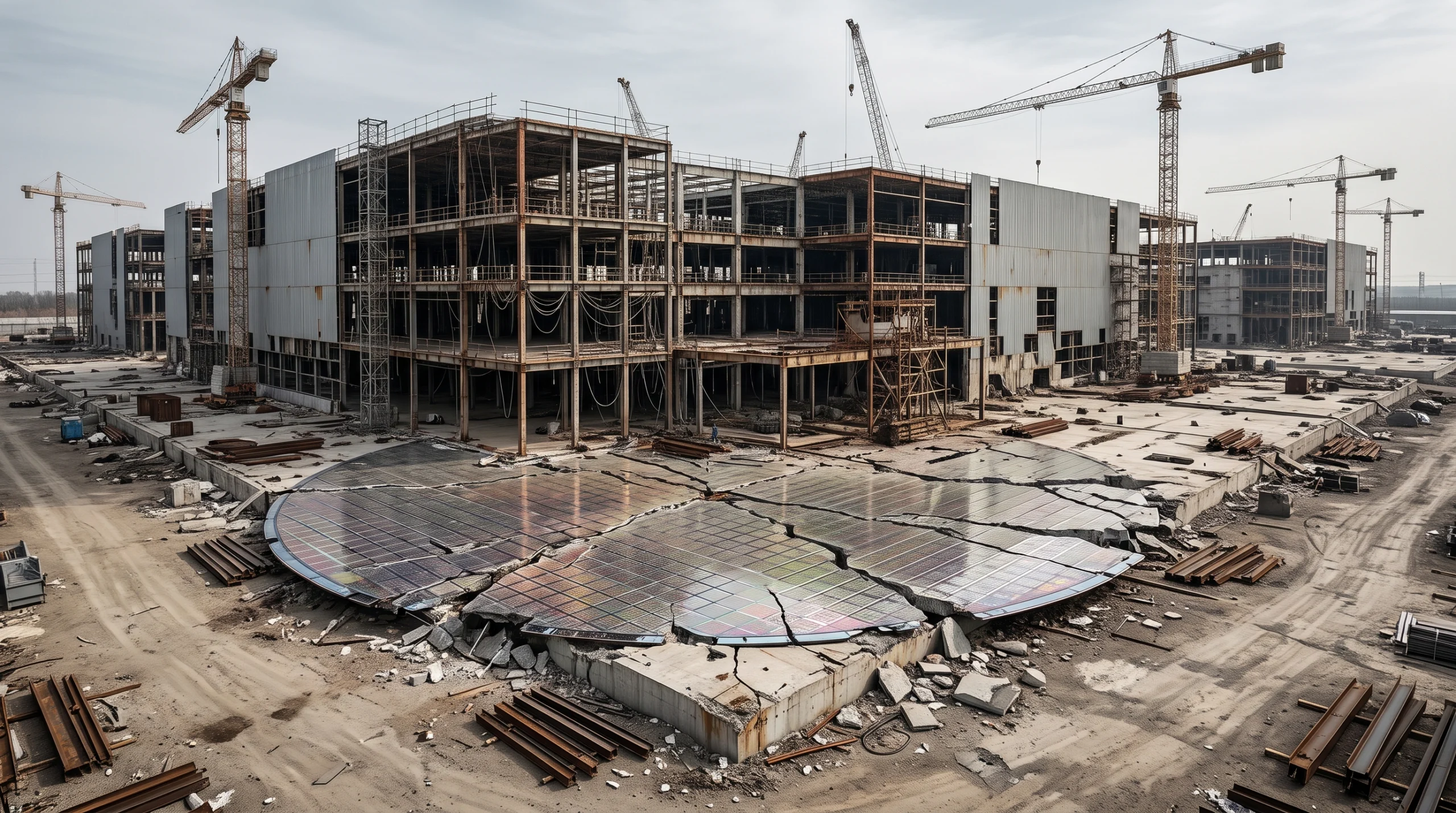
Shares of legacy semiconductor pioneer Intel tumbled nearly thirty percent after management issued weak forward guidance for personal computer chip demand and admitted that the company will not generate positive free cash flow throughout 2026. Standard market commentary focused solely on top line revenue reductions. However, the fundamental breakdown lies in the collapse of Intel internal financing mechanism, where declining desktop revenues can no longer subsidize multi billion dollar fabrication plant construction (from cnbc.com).
The Failure of the Internal Subsidy Model
For decades, Intel operated under a business model where lucrative profit margins from client computing processors funded capital intensive manufacturing upgrades. Building leading edge fabrication cleanrooms requires tens of billions of dollars per facility. Under current market conditions, desktop processor sales experienced sharp margin erosion. Without surplus cash generated by consumer personal computers, Intel foundry division faces a severe liquidity deficit. A foundry is a specialized factory that manufactures silicon chips based on designs provided by external clients. Operating a cutting edge foundry without internal cash subsidies forces management to choose between taking on expensive commercial debt or cancelling factory construction projects.
Enterprise Disinterest in Local Neural Hardware
The guidance collapse also exposed structural weakness in the anticipated enterprise computer upgrade cycle. Hardware marketers promised that 2025 and 2026 would usher in massive commercial demand for specialized computers equipped with neural processing units. Instead, enterprise corporate technology departments delayed fleet upgrades. Rather than purchasing expensive specialized laptops, corporate IT managers opted to deploy cloud based reasoning tools accessed through web browsers. This hardware fatigue left distribution channels crowded with unsold inventory, forcing steep price discounting across wholesale channels.
Supply Chain Ramifications for Toolmakers
Intel financial retrenchment carries immediate consequences for specialized semiconductor tool manufacturers like ASML and Applied Materials. Advanced fabrication sites rely on complex photolithography scanners that take years to manufacture and cost hundreds of millions of dollars each. As cash flows contracted, Intel renegotiated delivery timetables, freezing scheduled tool installations. This capital pause creates order backlog uncertainty for European and Japanese precision optics suppliers that planned multiyear capacity around aggressive American expansion goals.
Restructuring Manufacturing Operations
Operating an integrated design and manufacturing business under quarterly public market pressure has become increasingly unsustainable. Competing directly with dedicated fabrication leaders like Taiwan Semiconductor Manufacturing Company requires decades of patience and consistent capital commitments regardless of broader economic downturns. Financial analysts increasingly predict that Intel may eventually spin off its manufacturing arm into a completely separate legal entity or seek private equity partnerships. Investors should evaluate whether legacy hardware manufacturers can maintain technological parity without consuming excess shareholder reserves.