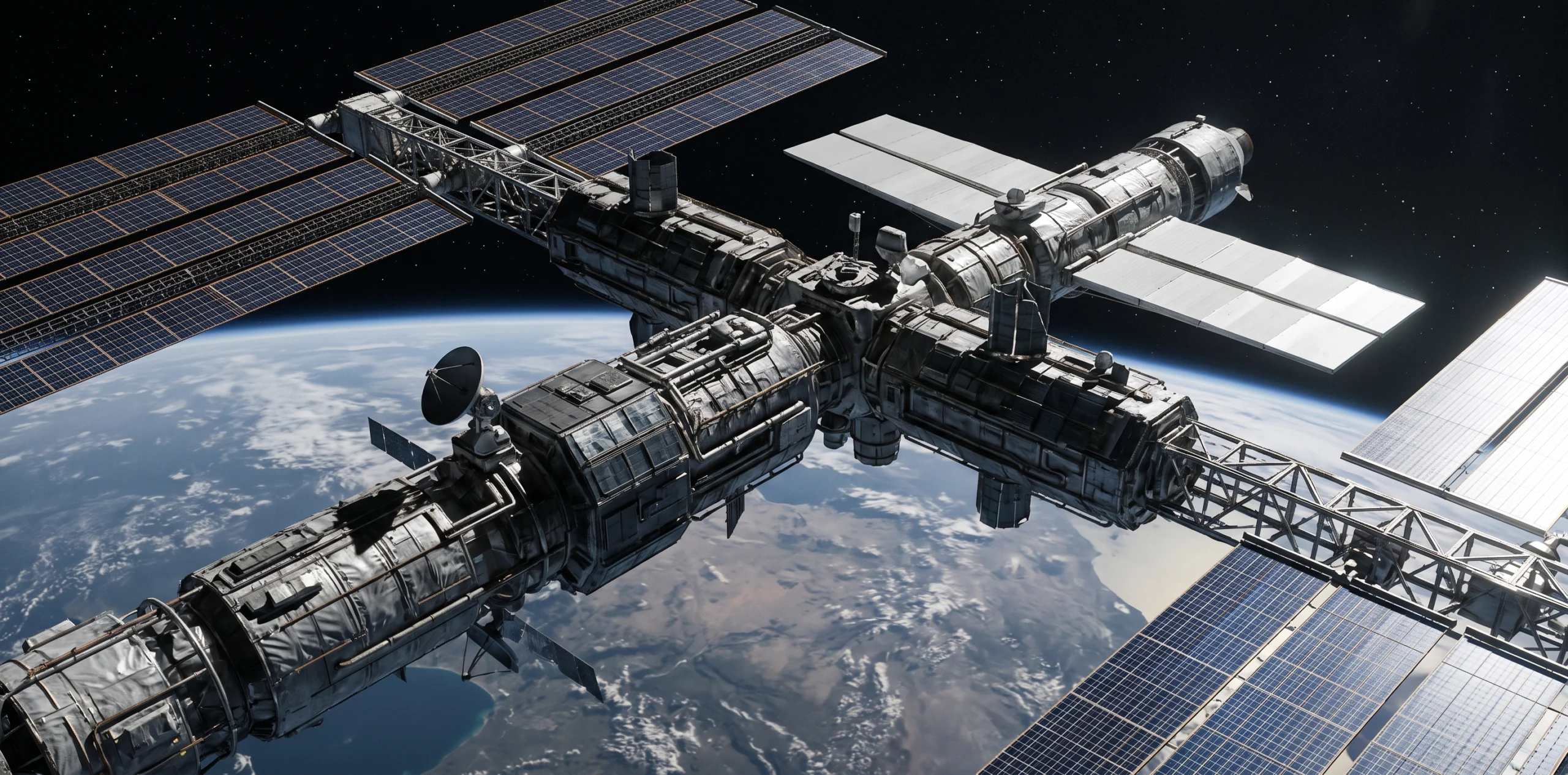
SpaceX and other technology companies want to launch artificial intelligence data centers into space between 2027 and 2030. The main idea is very simple and exciting. Artificial intelligence computers on Earth need massive amounts of electricity and land. In space, there are no clouds, no bad weather, and no electrical grids to worry about. Satellites can use giant solar panels to catch strong, direct sunlight all the time. While this sounds like a perfect plan in the news, engineers have to solve huge practical problems with heat, batteries, and internet connections before it can truly work.
The first major challenge is cooling the computers down. Many people think space is freezing cold, so computers should stay cool naturally. In reality, space is an empty vacuum with no air. On Earth, we use fans to blow air over hot computer parts, or we use millions of liters of cool water to absorb the heat. In space, there is no air to blow away the heat. A vacuum actually traps heat inside, just like a thermos keeps your soup hot.
To stop the artificial intelligence chips from melting, space data centers must pump special liquids like ammonia through pipes to collect the heat. Then, that liquid must flow into giant metal wings called radiators, which slowly shine the heat away into the darkness as invisible infrared light. These cooling wings have to be enormous, sometimes even bigger than the solar panels themselves, which makes the satellites heavy and difficult to build.
The second big problem involves batteries and continuous power. Even though space has great sunlight, satellites flying close to Earth often pass into the shadow of our planet. When a satellite goes behind the Earth, it enters darkness for about forty minutes every single orbit. Artificial intelligence computers cannot simply turn off and restart sixteen times a day without losing their work or breaking down. To keep running in the dark, they need massive batteries. The problem is that batteries are very heavy, expensive to launch on rockets, and wear out fast when they are charged and drained so many times each day. Engineers can try to put the satellites into special pathways that follow the sun to avoid the dark, but they still need heavy backup batteries for safety and sudden power spikes.
The final hurdle is moving data between Earth and space. Artificial intelligence needs to read and send huge amounts of information every second. On Earth, data centers use thick underground glass cables that carry information almost instantly. In space, you cannot use cables, so satellites have to send data using radio waves or laser beams. Radio waves are too slow for the massive files that artificial intelligence uses. Lasers are much faster and can connect satellites to each other in orbit, but shooting a laser beam down to Earth is tricky. Thick clouds, rain, and dust in the air can block the laser beam and break the connection. Because of this, sending massive training files up to space and bringing the answers back down to users on Earth creates a giant traffic jam.
Putting computers in orbit is a bold vision that could save energy on Earth one day. However, turning empty space into a working computer room requires overcoming the basic laws of physics. Until companies can build lighter cooling wings, longer lasting batteries, and weatherproof laser links, most of our artificial intelligence will still need to live right here on the ground.
Solving the Space Data Transfer Problem
To move massive files between Earth and satellites efficiently, engineers are replacing older radio systems with new light and smart networking methods. Because artificial intelligence requires huge amounts of information, relying on a single method is not enough. Instead, space companies combine four main solutions to get the best speed and reliability.
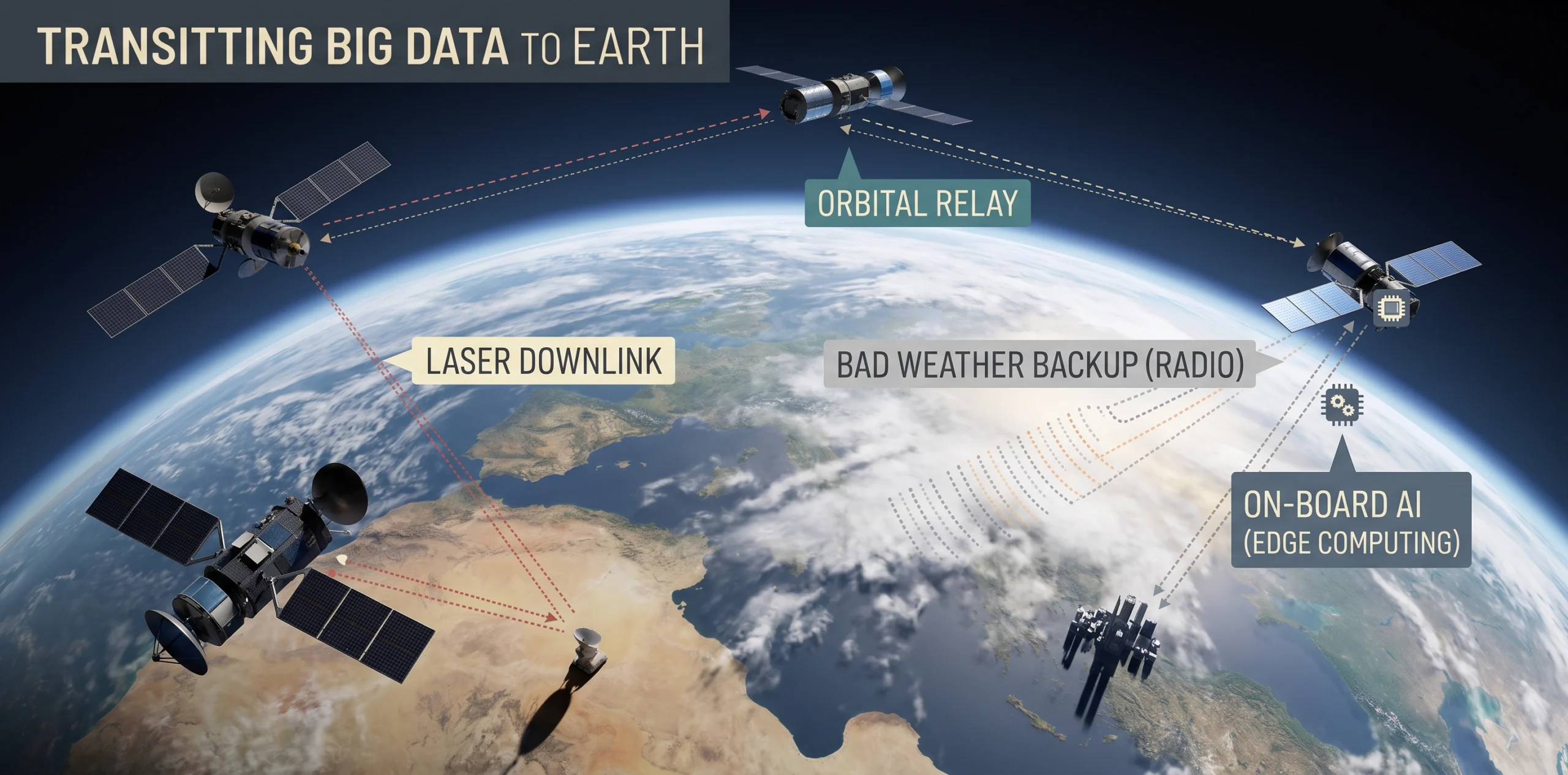
The fastest way to send big files is through free space optical communication, which means using invisible infrared laser beams. While traditional radio waves spread out and travel slowly, a laser is a tight beam of light that can carry up to one hundred times more data per second. It works just like the fiber optic internet cables under our streets, except the light travels through open space instead of a glass wire. This allows satellites to download or upload giant files in seconds rather than hours.
Because clouds and rain block laser beams, engineers use a smart backup plan called site diversity. A space company builds many laser receiving stations all over the world in very dry and sunny places, such as deserts or on top of tall mountains above the clouds. In the blank darkness of space, satellites can shoot lasers to one another with zero weather problems. If a satellite wants to send a massive file to a station in Europe, and it is raining there, the satellite simply beams the file to a neighboring satellite in space. That second satellite then shoots the laser down to a sunny station in a desert, and the file travels the rest of the way through underground Earth cables.
For times when the weather is bad everywhere or when data needs to go to a specific cloudy city, satellites use a hybrid system. They carry both laser equipment and high frequency radio antennas. If thick clouds block the laser, the satellite automatically switches to high speed radio waves. These modern radio waves are slower than lasers, but they can punch right through heavy rain and fog without losing the connection. Combining both technologies ensures that the file transfer never stops completely.
Another clever way to solve the file transfer problem is to avoid sending the big files at all. This is called edge computing or data compression. Instead of sending raw, massive files back and forth, the satellites use their onboard artificial intelligence brains to do the heavy work in orbit. For example, if a satellite takes a thousand gigantic photos of the Earth, it does not send all those heavy pictures to the ground. The space computer studies the photos itself, finds the exact answer a user is looking for, and sends down a tiny text file with the final result. Shrinking the data before sending it is often the most efficient trick of all